
2 hr
Detroit Art Deco Architecture Tour with Interior Access
Step inside Detroit's most spectacular Art Deco buildings with exclusive lobby and interior access
Reserve
Hand-picked by our editors — 5 walking experiences from 12 reviewed
Verified partners for every tour, free cancellation where available, and instant confirmation on every booking.
2 hr
Step inside Detroit's most spectacular Art Deco buildings with exclusive lobby and interior access
Reserve
2 hr
Trace two centuries of urban transformation through iconic skyscrapers, Underground Railroad sites, and jazz landmarks
Reserve
2 hr 15 min
Walk through Detroit's vibrant core and hear stories of innovation, resilience, and rebirth
ReservePrices from verified partners. Availability updates in real time at checkout. Free cancellation policies apply where shown.
The landmarks, rooms, and views travelers on this tour remember — all visible on a single visit.
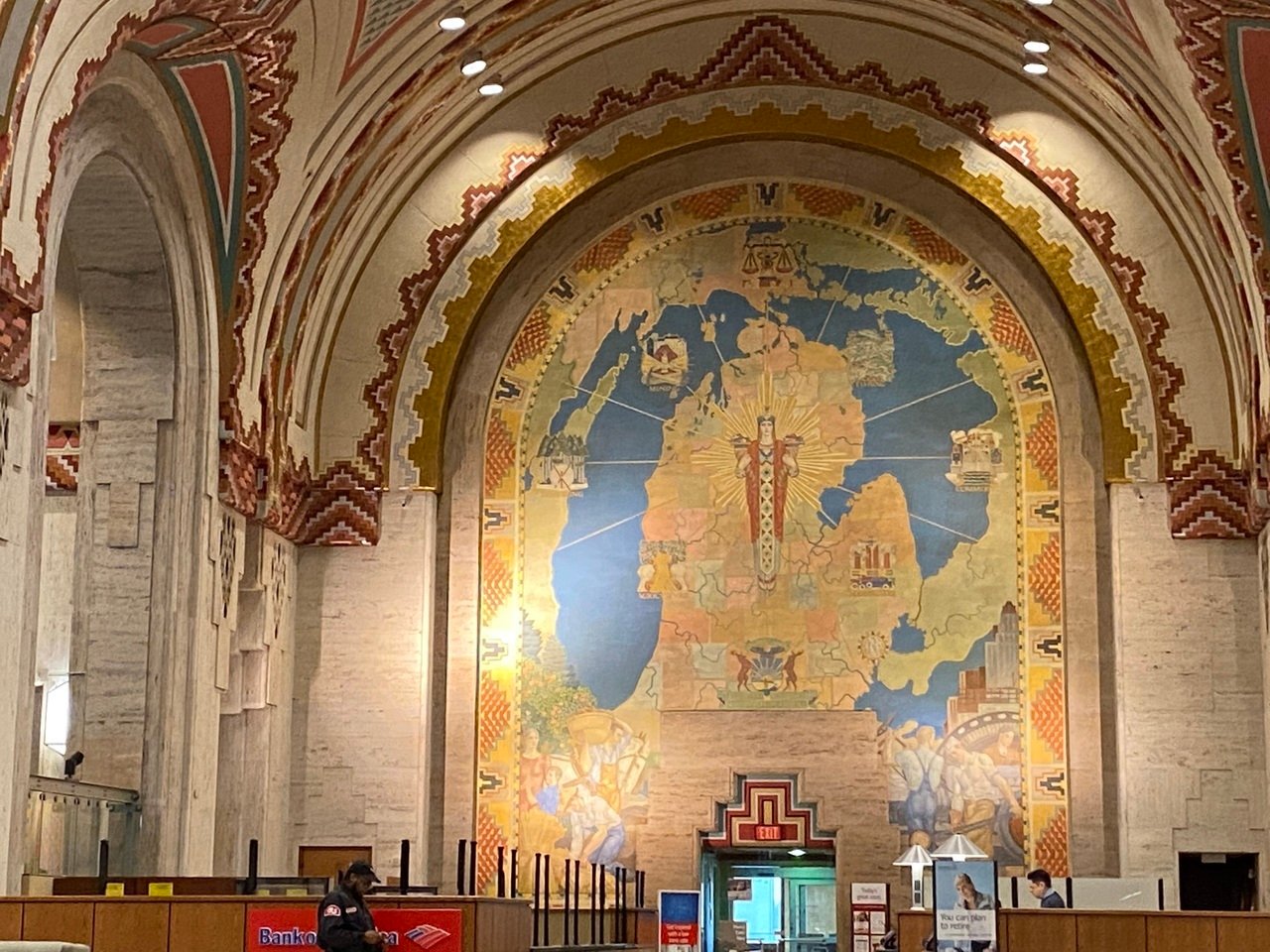
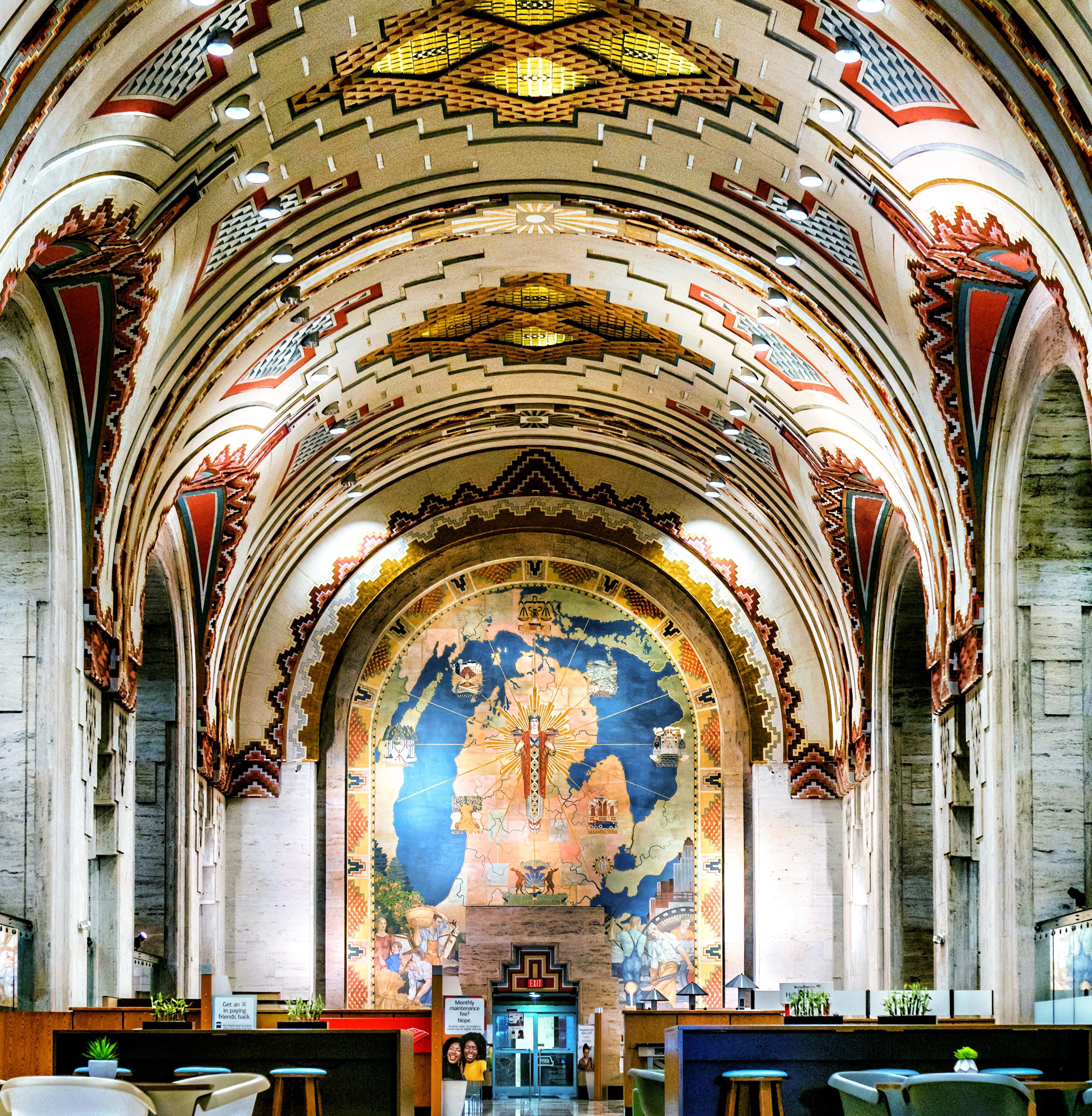
Known for its vibrant interior colors and intricate Aztec-inspired geometric tiles, this building features a lobby with a massive decorative ceiling. It remains one of the most significant examples of art deco design in the country.
Often referred to as the city's largest art object, this structure features extensive use of marble and gold leaf. It is a defining landmark of the skyline dating back to 1928.
This skyscraper features a unique red brick and limestone exterior with a notable terraced design. Its crown is a recognizable feature of the downtown landscape.
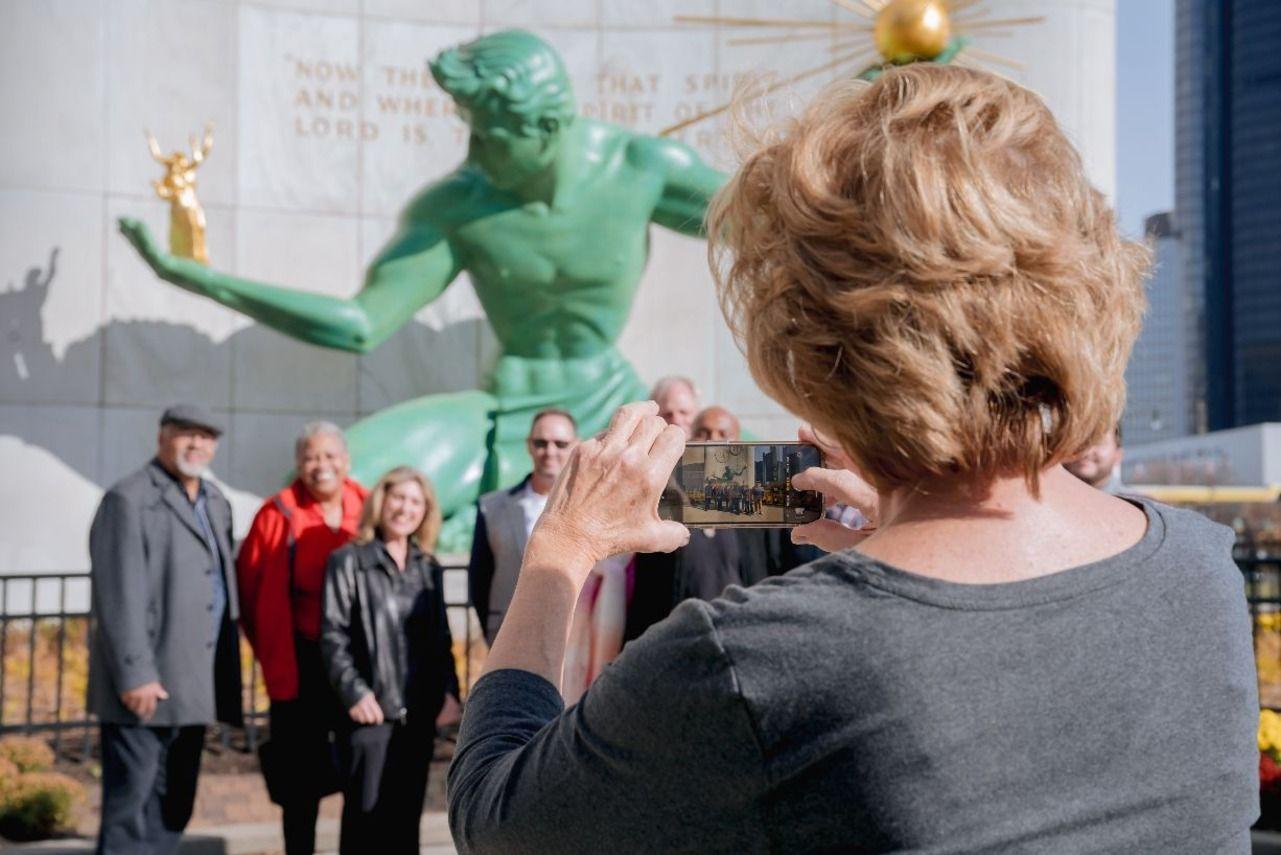
This bronze sculpture represents the human spirit and is a central symbol for the local community. It stands prominently outside the municipal offices.
This public space acts as a center for social gathering and historical displays in the heart of the city. It provides a green transition between the historic skyscrapers.
They complement each other; most visitors who do both call the aerial view the more thrilling option, while the detroit architecture walking tour provides the deepest local context. Choosing between these Detroit landmarks depends on whether you prefer immersive street-level exploration or a broad city overview.
| Feature | Top pick Walking Tour | Helicopter Tour |
|---|---|---|
Perspective |
Street-level intimacy | Bird's-eye panoramic |
Historical Depth |
Extensive local narrative | Minimal guided commentary |
Physical Activity |
Moderate walking | None |
Duration |
1.5–3 hours | 15–30 minutes |
Weather Dependency |
Light rain or sun | Clear skies required |
Photography Opportunity |
Close-up building details | Expansive urban landscapes |
| See tickets → |
Verdict: Opt for the detroit architecture walking tour tours if you desire a deep dive into urban design, or book detroit architecture walking tour tickets for an aerial perspective if you prioritize speed and scale; consult the detroit architecture walking tour tour operators for specific scheduling availability.
Choose your ticket, select your date, and reserve in under two minutes. Secure checkout handled by our verified partner.
Instant confirmation by email, with a mobile voucher you can save offline. No printing, no queuing at a collection desk.
Arrive at the entrance, show your voucher on your phone, and walk in. Most tickets include priority or skip-the-line access.
Practical details for your visit straight from our verified partners — hours, access, rules, and how to get there.
500 Griswold Street, Detroit, MI 48226
Main entrance lobby area
QLine streetcar serves Woodward Avenue. Multiple bus lines stop within two blocks of 500 Griswold Street
Park in nearby garages on Congress or Larned Street. Prices vary based on event demand
Comfortable walking shoes are recommended for the detroit architecture walking tour. Dress in layers to accommodate changing autumn temperatures in Michigan.
Small crossbody bags or backpacks are permitted on the detroit architecture walking tour. Security protocols follow standard downtown building guidelines.
Photography is encouraged throughout the detroit architecture walking tour. Please respect private building interiors and restricted areas.
The detroit architecture walking tour covers approximately 25 steps across the downtown route. Most locations are wheelchair accessible via designated ramps.
Mobile phones are allowed for personal use. We suggest silencing devices while inside quiet office corridors.
The detroit architecture walking tour is suitable for older children interested in urban history. Note that the duration may challenge younger walkers.
Water is permitted, but consumption of food is restricted inside historic building lobbies during the tour. Numerous cafes are available post-tour.
Service animals are permitted on the walking tour. Pets are generally not allowed inside the building interiors.
The detroit architecture walking tour proceeds rain or shine. Please check local weather forecasts before your departure.
Best time to go, insider tips, nearby landmarks, and the cancellation fine print — flip through to skim what matters to you.
How crowds, weather, and events shift across the year.
Enjoy comfortable autumn temperatures averaging 70°F. The fall light provides excellent contrast for photography.
Experience the changing foliage against historic facades. Crowds are thinner as students return to class.
Prepare for colder air and brisk wind. Tours are best enjoyed with a heavy coat.
Expect high temperatures and humidity. Arrive at 10:00 to minimize exposure.
Small details that turn a good visit into a great one.
Arrive between 10:00 and 12:00 to avoid mid-day traffic. This window ensures the best lighting for building facades.
Wear broken-in walking shoes to handle the 25 steps encountered. High heels are not recommended for this route.
Book your detroit architecture walking tour in advance to guarantee a spot. Walk-ins may not be available.
The detroit architecture walking tour takes place outdoors between stops. Monitor local reports if rain is expected.
Some interiors on the detroit architecture walking tour have restricted hours. Stick with your guide for entry.
Ask your guide about the history of the city skyline during the detroit architecture walking tour. They provide context on urban development.
Non-bookable sights within a short walk — free to visit, easy to pair.
A famous bronze sculpture located at the Coleman A. Young Municipal Center
A central gathering space featuring landscaped gardens and fountains
An iconic art deco skyscraper notable for its tiered design
Scenic pathways along the Detroit River offering views of Canada
Flexible, no hidden fees.
Full refunds are available for cancellations made at least 24 hours prior to the scheduled tour. Cancellations requested within the 24-hour window are non-refundable.
Hand-picked options within walking distance — pick a district for vibe, or a specific hotel for convenience.
Central area with various lodging options
Detroit's downtown architectural corridor holds the largest collection of pre-Depression skyscrapers outside Manhattan, twenty-three buildings completed between 1925 and 1929 when the city ranked fourth in national population and architects arrived with commissions for banks, theaters, and office towers that would never be replicated at that density again. The Guardian Building rose in 1929 clad in orange brick and Pewabic tile, its lobby vaulted forty feet above a floor inlaid with Siena marble; across Griswold Street the Penobscot Building claimed the title of tallest structure outside New York and Chicago, its Art Deco spire visible from Windsor. Albert Kahn, who designed a quarter of Detroit's industrial plants, turned his systemic approach to the Fisher Building in 1928, wrapping structural steel in Minnesota granite and Belgian marble, the arcade lined with sixty retail bays and a gilded barrel vault that survived seven decades of deferred maintenance. These structures were not showpieces but working infrastructure, built to house insurance underwriters, brokerage firms, and the administrative apparatus of an industrial economy that employed three hundred thousand autoworkers within the city limits. The streetscape today reflects both preservation and adaptive reuse, with several buildings granted National Historic Landmark status in the 1980s and converted to mixed-use occupancy after decades as single-tenant offices. A Detroit architecture walking tour connects these nodes along a two-mile downtown loop, the route beginning at Campus Martius and extending west to the Fisher Building's New Center enclave or south to the riverfront where the Renaissance Center's seven glass towers anchor the skyline. Guided options offer interior access to lobbies typically secured during weekdays, including the Guardian's mosaic ceiling and the Book Tower's original banking hall. Self-guided walkers trace the same corridor using marked heritage plaques installed by the Detroit Historical Society, each building's facade legible from the sidewalk in terracotta ornament, bronze spandrels, and the vertical emphasis that defined the era's commercial aesthetic. The district's walkability improved following streetscape investments in 2010 and the return of ground-floor retail to previously vacant storefronts. Architectural historians cite Detroit's downtown as a case study in speculative construction during the final years of the 1920s boom, when developers anticipated continued population growth and the buildings were designed with expansion floors that were never occupied. The concentration of Art Deco and Beaux-Arts facades within six city blocks remains intact because post-war demolition pressure was absorbed by outer neighborhoods rather than the central business district, leaving the core frozen in a pre-Depression spatial logic. Walking tours emphasize this temporal layering, the route passing theaters converted to parking garages, bank lobbies now serving as event venues, and the original street grid that predates the automotive commute. Seasonal light shifts dramatically in the urban canyon, morning sun illuminating east-facing terracotta and late afternoon casting long shadows across Woodward Avenue's forty-foot width.
"Detroit's downtown holds the largest collection of pre-Depression skyscrapers outside Manhattan, twenty-three buildings completed between 1925 and 1929."
A step-by-step walkthrough of the visit — what you'll see, how long each stage takes, and the details that matter.
You begin at Campus Martius, the downtown transit hub rebuilt in 2004 where Woodward Avenue meets Michigan Avenue and the street grid pivots forty-five degrees. The Guardian Building rises two blocks north, its orange and ochre facade visible above lower commercial structures; you cross at the pedestrian signal and enter the lobby where Pewabic tile frames the elevator bays and the vaulted ceiling amplifies footsteps on polished marble. Guided tours pause here for fifteen minutes to identify the terra-cotta motifs and explain the building's designation as a National Historic Landmark, while self-guided visitors photograph the arcade before continuing north. You walk west along Congress Street, passing the Penobscot Building's limestone base and the renovated storefronts of the Capitol Park district, then turn north on Griswold where the street narrows and the canyon effect intensifies. The Fisher Building appears after a half-mile walk or a brief streetcar ride along Woodward, its arcade open during business hours with the original brass mailboxes and theater marquee intact. You climb twenty-five steps from street level to the main entrance where the barrel vault begins, the gilded plaster still bearing its 1928 finish. Tours conclude here or extend south to the riverfront where the Detroit River frames the Renaissance Center's reflective glass, the walking distance totaling two miles with level pavement and marked crosswalks throughout the downtown corridor.
The detroit architecture walking tour is open only on Saturdays from 10:00–12:30. All other days are closed.
The tour includes 25 steps; most locations are accessible. Please contact your operator for specific mobility needs.
Prohibited items include tripods, large suitcases, and weapons. Keep your detroit architecture walking tour tickets ready for check-in.
Yes, photography is permitted on the detroit architecture walking tour. Capture the stunning facades during your visit.
The best arrival window is 10:00–12:00. This provides optimal lighting for your detroit architecture walking tour tour experience.
No formal dress code exists, but comfortable walking shoes are required. Dressing for the weather is advised.
Eating is restricted inside buildings on the detroit architecture walking tour. Water is permitted.
The meeting point is 500 Griswold Street. Public transport and parking are available nearby for your detroit architecture walking tour arrival.
Yes, children may join if they can manage the walking pace. Ensure they are prepared for a city-based tour.
Full refunds are issued for cancellations made at least 24 hours in advance. No refund is provided for late cancellations.